After eleven years in bathroom showrooms across Sydney, I’ve seen it all. I’ve watched clients agonise over marble veins and rainfall shower heads, only to completely drop the ball on the one thing they look at every single morning: the mirror. We treat the bathroom as a functional box, but if you shift your perspective—viewing it as the primary anchor for your daily wellness ritual—the importance of that mirror changes instantly.
Your bathroom isn't just a place to brush your teeth. It is where you prepare for the day and where you decompress at night. The mirror is the focal point of that ritual. Get the size wrong, and the whole room feels "off." Get it right, and suddenly, a simple morning routine feels like a luxury experience. And no, you don’t need a full-scale demolition to achieve this. Often, it’s the small changes that shift the entire energy of a room.
The Psychology of the Ritual Space
We often talk about "wellness-focused design" as if it’s a high-concept marketing term, but it’s actually quite simple. It’s about how a space makes you feel when you’re half-asleep or exhausted after a long day. A mirror that is poorly proportioned—too high, too wide, or poorly lit—creates visual noise. It breaks the calm.
When I work with clients, I always start with the psychology of the vanity. We want symmetry, softness, and light. A statement mirror isn't just about size; it’s about the presence it holds. If you’ve ever looked at a design gallery—or perhaps scrolled through high-quality photography sourced from platforms like Shutterstock—you’ll notice that the most calming bathrooms don't have "cluttered" walls. They have intentional, balanced surfaces.
Mirror Sizing: The Rules of Proportion
I’ve spent Click here for more years fielding the same question: "How big should this actually be?" There is no single "correct" answer, but there are definitely wrong ones. The goal is to harmonise the mirror with your vanity proportions. If the mirror dwarfs the vanity, the room looks unbalanced. If it’s too small, it looks like an afterthought.

Here is my "Sydney Showroom" guide to getting the sizing right:
- The Width Rule: Generally, the mirror should not be wider than the vanity cabinet itself. In a modern, minimalist bathroom, I personally prefer a mirror that aligns perfectly with the width of the vanity top, or sits just slightly inside the edge. This creates a clean, vertical line that draws the eye upward, making the ceiling feel higher. The Eye-Line Test: This is the most common mistake. People mount mirrors based on the top of the door frame or the height of the tallest family member. Forget that. The centre of the mirror should be at average eye level (roughly 150cm to 165cm from the floor). If you are buying a statement mirror, make sure it’s tall enough that you don't have to hunch down to see your hair, but low enough that it feels connected to the tapware. The Clearance Gap: If you have a backsplash, your mirror should ideally sit about 100mm to 150mm above the splashback or the top of the vanity. Don't crowd the tapware—it makes cleaning a nightmare and creates visual tension.
A Quick Reference Table for Vanity/Mirror Sizing
Vanity Width Recommended Mirror Width Best Style 600mm - 750mm 500mm - 600mm Circular or slim rectangular 900mm - 1200mm 800mm - 1000mm Rectangular or pill-shaped 1500mm+ Full-width or twin mirrors Horizontal pill or arched twinLayered Lighting: The Non-Negotiable
I cannot stress this enough: check your lighting temperature and mirror placement before you pick up a drill. I see people install stunning, expensive mirrors only to realise they’ve cast deep, unflattering shadows across their own faces because of a poorly placed overhead downlight.
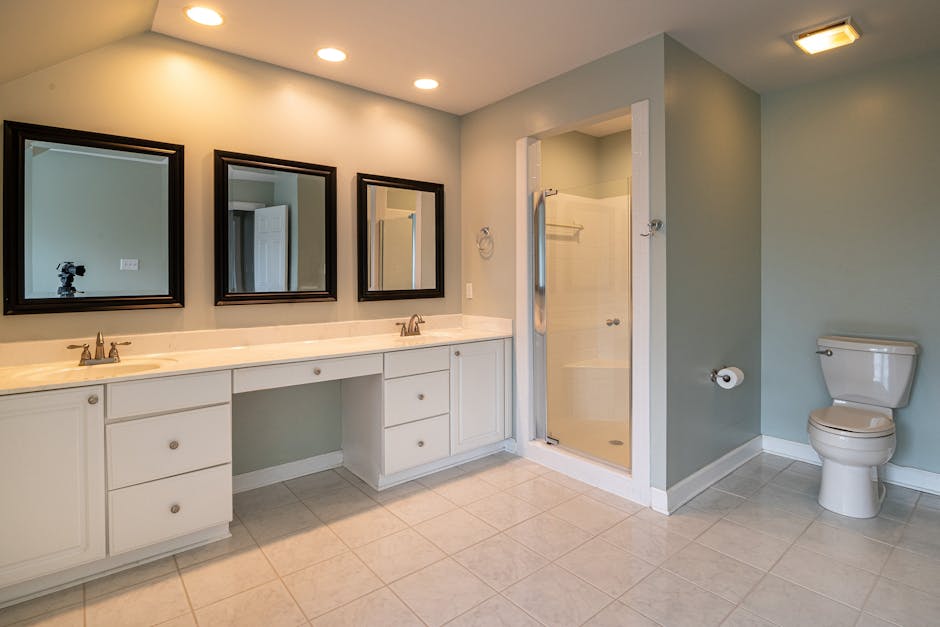
When we talk about layered lighting, we mean three things:
Ambient Lighting: The general glow of the room. Task Lighting: The light you need for shaving, makeup, or skincare. This is where your mirror choice is crucial. Accent Lighting: The "mood" light that makes the bathroom feel like a spa.If you choose an integrated LED mirror, ensure the light is diffused. Nobody wants to be blinded by naked LED dots reflecting in their eyes at 6:00 AM. Look for a mirror with a warm, soft glow—somewhere in the 3000K to 4000K range. It’s the difference between looking like you’re in a sterile hospital ward and looking like you’re in a high-end hotel.
For those looking for inspiration, the LED Mirror World website is a fantastic tool to visualise how these integrated lighting solutions can actually replace the need for cluttered wall sconces. By consolidating your task lighting into the mirror itself, you simplify the vanity wall, which is a classic "small change that changes everything."
Don't "Just Renovate"—Enhance
I get genuinely annoyed when I read articles that tell homeowners to "just renovate" to get the look they want. Do you know what a full bathroom renovation costs? It’s not just a budget issue; it’s a lifestyle disruption. You don't need to rip out your tiles to get a "modern vanity" feel.
If you have an existing vanity that feels a bit dated, you can shift the entire aesthetic by changing the mirror. A frameless, backlit mirror can modernise a space instantly. It draws the focus away from the vanity cabinet (which might be showing its age) and pulls it toward the light and the reflection.
If you’re looking for regional inspiration, I often point clients toward local publications. For instance, if you’re flicking through a Bendigo Advertiser subscription/login flow, look at the lifestyle sections—they often showcase regional homes that have moved away from the "big box" store aesthetic in favour of more thoughtful, local design choices. Seeing how others in similar climates have styled their spaces can be incredibly grounding. It reminds you that good design isn't about having a limitless budget; it’s about making choices that reflect how you actually live.
The "Small Changes" Checklist
I keep a running list of things that cost very little but change the whole room. Since we are talking about mirrors and vanities, here is my go-to list for a quick refresh:
- Mirror Placement: If your mirror is too high, move it. If it’s floating, ensure it’s not just a "sticker" on the wall—give it some depth. Lighting Temperature: Change your bulbs. If your bathroom looks like an operating theatre, swap your cool-white globes for a warmer 3000K-3500K. You’ll be surprised how much better you look in the mirror. Declutter the Surface: If your vanity is a graveyard for old skincare bottles, your beautiful new mirror won't save you. Clear the bench. One high-quality vessel or a single plant is all you need. Hardware Match: If you’re installing a new mirror, make sure the finish (brushed nickel, matte black, etc.) ties into your tapware. It’s a tiny detail, but it’s the difference between "DIY" and "Interior Designer."
Final Thoughts: The Ritual is Yours
Choosing a mirror size isn't just about a tape measure. It’s about understanding the scale of your room and the intent of your space. Whether you’re opting for a large statement mirror that spans the wall or something smaller and more intimate, the guiding principle should always be how it serves *you*.
Don't be afraid to experiment with shape. While traditional rectangles are safe, a rounded or organic-shaped mirror can break up the hard lines of a vanity and tiled walls, bringing a softness to the space that feels much more "wellness-oriented."
The next time you’re standing in front of your mirror, ask yourself: does this help me start my day, or does it add to the clutter? If it’s the latter, you know where to start. Small changes, better lighting, and the right proportions—that is the real secret to a bathroom that works.
Looking for more design inspiration? I encourage you to browse local projects and expert tips to build your own "small changes" list. Sometimes, the best advice comes from seeing what works in other homes across Australia. Stay mindful, stay simple, and keep your lighting warm.